
When low voltage cable for power distribution needs double insulation — and when it doesn’t
When Low Voltage Cable for Power Distribution Needs Double Insulation — and When It Doesn’t
Choosing the right low voltage cable for power distribution is critical—especially when safety, longevity, and compliance are non-negotiable. But here’s the key question: when does a low voltage cable for residential buildings require double insulation, and when is it unnecessary? As a trusted rubber cable exporter with ISO9001 and CCC certification, Hebei Yongben Wire and Cable Co., Ltd. delivers high-reliability low voltage cable for power distribution—custom-engineered for global projects across 100+ countries. Whether you’re a project manager specifying systems or a homeowner prioritizing safety, understanding insulation requirements ensures code compliance, reduces risk, and maximizes service life.
Short Answer: Double Insulation Is Required Only in Specific Risk-Exposed Applications — Not by Default
Low voltage cables (≤600 V) used in power distribution do not universally require double insulation. In fact, most standard indoor installations—like building wiring, panel feeders, or branch circuits—rely on single-layer thermoplastic or crosslinked polyethylene (XLPE) insulation, fully compliant with IEC 60502, GB/T 12706, or UL 44/83 standards. Double insulation (i.e., two independent insulating layers, often with a separation barrier or jacketed construction) becomes mandatory only where:
- Physical damage risk is elevated (e.g., exposed outdoor runs, conduit-free surface mounting, or areas prone to abrasion);
- Electrical isolation must be maintained even if the outer layer is compromised (e.g., in wet locations, medical facilities, or Class II equipment supply);
- Local codes or project specifications explicitly demand enhanced protection—such as in certain European TN-C-S systems or UK BS 7671 Appendix 15 scenarios.
For project managers, this means double insulation adds cost and stiffness—so it should be specified only when justified by risk assessment and regulation—not assumed as “safer = always better.” For homeowners, it’s rarely needed inside walls or dry interiors—but may matter for garage subpanels, garden lighting feeds, or DIY extensions where mechanical exposure is real.
Where Double Insulation Is Typically Required (and Why)
Double insulation is not about voltage level—it’s about failure mode resilience. Key applications include:
- Surface-mounted wiring in commercial/industrial settings: Where cables run along walls or ceilings without conduit, an outer PVC or LSZH jacket over XLPE insulation prevents accidental puncture during maintenance or retrofitting.
- Wet or corrosive environments: Marine docks, agricultural buildings, or food-processing plants often mandate double-insulated cables (e.g., H07RN-F with rubber inner + PVC outer) to prevent moisture tracking through micro-cracks in a single layer.
- Medical IT systems (isolated power): Though still low voltage, these circuits require reinforced insulation per IEC 60601-1 to ensure patient safety—even under single-fault conditions.
- Class II portable equipment cords: Think of extension leads or temporary site power—double insulation eliminates reliance on grounding, making them safer in ungrounded or faulty-ground scenarios.
Note: Double insulation ≠ armored cable. Armoring (e.g., SWA) provides mechanical protection but doesn’t inherently add electrical insulation redundancy—unless combined with dual-dielectric design.
Where Single Insulation Is Fully Sufficient (and Often Preferred)
Most common low voltage power distribution uses robust single-insulation solutions—and for good reason:
- Concealed in-wall residential wiring: PVC-insulated (PVC/PVC) or XLPE-insulated (XLPE/PVC) cables like BV, YJV, or THHN meet all fire, ampacity, and longevity requirements when installed per NEC Article 334 or IEC 60364-5-52.
- Underground direct burial (with proper rating): Cables like YJLV22 (XLPE + steel tape + PVC) rely on one primary dielectric layer (XLPE), with the armor and outer sheath serving mechanical—not insulative—functions.
- Overhead secondary distribution lines: Here’s a critical distinction—many overhead “covered” conductors are not insulated at all for electrical safety. They use a thin polymer covering (e.g., LLDPE or XLPE) purely for weather resistance and reduced fault probability—not shock protection. These are treated as bare conductors under IEEE 141 and CSA C22.3 No. 1. A prime example is our Covered Line Wire AAC Aluminum Conductor 6AWG Plum, rated 600 V but designed for pole-to-pole runs where clearance—not insulation thickness—ensures safety. Its 0.03-inch covering meets ASTM B230/B231 for mechanical durability, not dielectric strength.
Specifying double insulation where unnecessary increases material cost by 15–30%, reduces bend radius, complicates termination, and may even hinder heat dissipation—reducing ampacity.
How Project Managers Can Make the Right Call (in 3 Steps)
You don’t need to memorize every code clause. Use this practical decision framework:
- Map the installation environment: Is the cable exposed to impact, UV, moisture, chemicals, or frequent handling? If “no” to all, single insulation almost always suffices.
- Check local adoption of harmonized standards: EU projects often reference HD 60364-5-52; US sites follow NEC Table 310.15(B)(16) and Article 300.5/310.104. Neither mandates double insulation unless specific conditions (e.g., wet location + no raceway) apply.
- Verify equipment interface requirements: If feeding a Class II device or an isolated transformer, consult the OEM spec—not just cable datasheets. The system-level requirement drives the cable choice, not vice versa.
At Hebei Yongben, our engineering team supports this process with free application reviews—including insulation type validation against IEC, GB, UL, and CSA frameworks—helping you avoid over-specification while guaranteeing compliance.
Final Takeaway: Safety Comes From Correct Application — Not Extra Layers
Double insulation is a targeted solution—not a universal upgrade. For residential wiring, concealed feeders, or properly supported overhead lines like the Covered Line Wire AAC Aluminum Conductor 6AWG Plum, single, high-quality insulation (XLPE, EPR, or certified PVC) delivers full safety, longevity, and code alignment. What matters most is matching the cable’s construction to its real-world exposure—not adding layers that don’t address actual risks. When you partner with Hebei Yongben, you get more than certified cables: you get context-aware guidance shaped by 100+ country deployments, ISO9001 discipline, and hands-on experience solving what’s *actually* on your project site.
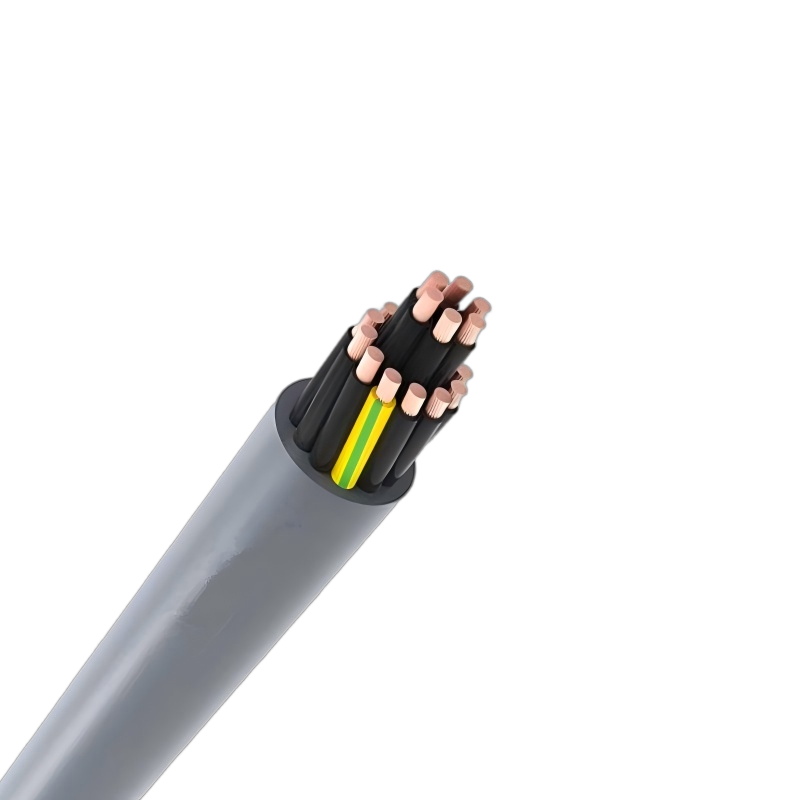
 CVV Control Cable-Hongda Cablecvv control cable
Voltage Rating: 450/750 Volts,
Conductor: soft annealed copper
Insulation: PVCDetails YSLY Control CablePVC Insualted Control Cable
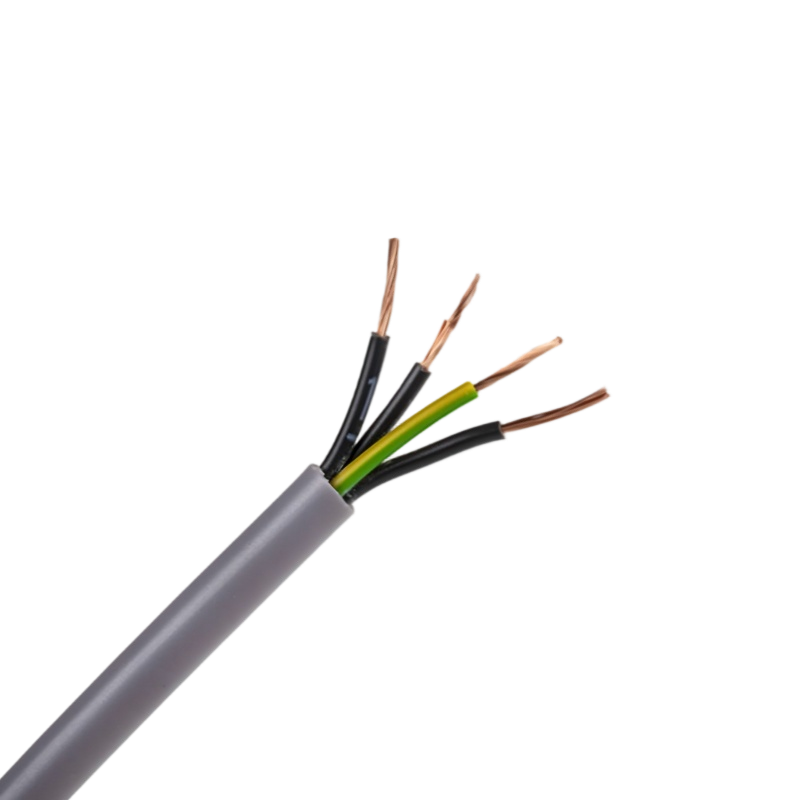
Voltage Rating: 300/500V
Conductor: soft annealed copper,class 5
Insulation: PVC
Sheath: PVCDetails YY Control Cable-PVC Insulated Flexible Control Cable VDE 0250CU PVC PVC Control Cable
Voltage Rating: 300/500V
Conductor: soft annealed copper
Insulation: PVC
Sheath: PVCDetails
Get in Touch
*We respect your confidentiality and all information are protected.